

A home coffee bar rarely starts out pretty: a machine on the counter, a clipped bag of beans, mugs wherever they fit. A café-style glow-up is mostly small, renter-friendly changes, not a remodel. Below are ten common “before” problems, the “after” look that fixes each one, and three changes that get you there.
Some links in this post are affiliate links, so if you buy through one we may earn a small commission at no extra cost to you. As an Amazon Associate I earn from qualifying purchases.
The look of the setup matters right now. Pinterest’s 2026 Hobbies Trend Report says searches for “coffee brewing aesthetic” rose 160%, a sign that “the look, process and setup are now part of the appeal” (Pinterest Newsroom). Elle Decor, reporting on the same data (global Pinterest searches in May 2026 compared with May 2025), notes that searches for “vintage coffee corner” rose 430% (Elle Decor). Want this year’s colors and styles? See our 12 cozy café design trends for your home coffee bar. For classic looks that never date, read 10 timeless café-style ideas for a home coffee bar.
Contents
- From Counter Clutter to a One-Tray Station
- From a Blank Wall to Floating Shelves
- From Mugs in the Cupboard to a Mug Tree
- From a Dim Corner to Warm Light Where You Brew
- From a Plain Wall to a Color Backdrop
- From a Machine Hogging the Counter to a Cabinet Nook
- From Scattered Gear to a Brew-Order Line-Up
- From Plain Mugs to Café Glassware
- From Mismatched Containers to One Color Story
- From the Same Setup All Year to a Seasonal Swap
- FAQ
- Wrapping Up
1. From Counter Clutter to a One-Tray Station

Before: the machine, sugar, spoons, beans and a stray receipt share one strip of counter. After: one tray holds the daily coffee kit, and everything else has a home. Good Housekeeping’s 2026 roundup of designer coffee bar ideas puts it simply: “A footed wooden tray can make any coffee setup feel more special” (Good Housekeeping). A New Jersey kitchen remodeler suggests the same no-construction start: claim a section of counter near an outlet and “add a tray to define the zone” (Custom Kitchens by Lopez).
How to get the look at home: Choose a tray big enough for a cup, the sugar and your current canister, and set it beside the brewer. A wooden option like this solid mango wood oval tray works on a counter or a sideboard.
Try this:
- Clear the counter completely, then put back only the daily coffee kit.
- Set the cups, sugar and spoon on one tray beside the brewer.
- Move backups (filters, spare beans, extra mugs) into a cupboard.
2. From a Blank Wall to Floating Shelves

Before: an empty wall above a crowded counter. After: floating shelves take cups, glasses and brewing gear off the counter. Good Housekeeping highlights designers Natalie Beach and Chuck Womack of Kitchen Envy, who “tuck large coffee machines under floating shelves” (Good Housekeeping). For small spaces, the same remodeler notes that vertical storage such as mug hooks and a tall canister shelf “does the heavy lifting” (Custom Kitchens by Lopez).
How to get the look at home: Hang the lowest shelf high enough to open the machine’s lid, and keep everyday pieces on it. A set of three, such as these BAYKA floating shelves (set of 3), lets you stagger them. Check the weight rating and use wall anchors that suit your wall.
Try this:
- Measure from the counter to the top of your machine, then add room to open the lid.
- Keep daily cups and your dripper on the lowest shelf.
- Leave one shelf partly empty so it looks styled, not stuffed.
3. From Mugs in the Cupboard to a Mug Tree

Before: mugs hide behind a cupboard door and the coffee bar looks bare. After: favorite mugs sit out, ready to grab. Good Housekeeping suggests that on a small counter you can “elevate a countertop with a simple mug tree” (Good Housekeeping). Rebekah Murphy, co-founder of Murphy & Moore Design, calls a mug peg rack “both practical for everyday use and a charming focal point” (Good Housekeeping).
How to get the look at home: A mug tree needs only a small patch of counter; hooks under a shelf work if the counter is full. A tree like this MyLifeUNIT 6-hook mug tree also lets washed mugs air-dry.
Try this:
- Pick the four to six mugs you reach for most.
- Place the mug tree on the side of the brewer you pour from.
- Swap the display mugs when the season changes (see idea 10).
4. From a Dim Corner to Warm Light Where You Brew

Before: the ceiling light leaves a shadow over your cup. After: warm light right where you brew. A coffee bar lighting guide from Baristanest says to start with task light: “Add enough directed light to read the water level, scale and controls without your hand casting a shadow,” and it notes that “Warm 2700–3000K products are common in homes” (Baristanest).
How to get the look at home: If your hand shadows the cup, add light from the side or under a shelf rather than a brighter ceiling bulb, and match the warmth of your other bulbs. Rechargeable options like these dimmable under-cabinet lights avoid new wiring, and a small lamp works on a sideboard.
Try this:
- Brew once at your usual time and note where the shadows fall.
- Add one task light close to the counter, under a shelf or beside the machine.
- Choose a warm white that matches the kitchen’s other bulbs.
5. From a Plain Wall to a Color Backdrop

Before: the coffee bar fades into a blank wall. After: a painted panel, tile or paneling behind the machine frames it as its own zone. “We like to include a wall treatment behind the bar for dimension,” designer Marnie Oursler tells Good Housekeeping (Good Housekeeping). The New Jersey remodeler lists “a finished wall or backsplash behind it” among a coffee bar’s essentials and suggests peel-and-stick backsplash as a budget move (Custom Kitchens by Lopez).
How to get the look at home: Paint a band slightly wider than the coffee bar, or use peel-and-stick tile if you rent (check the removal instructions first). Pick a color from your mugs or canisters, in a wipeable finish.
Try this:
- Mask off a band about the width of the coffee bar and paint it one color.
- Repeat that color in one or two mugs or canisters.
- Choose a wipeable finish, or peel-and-stick tile for a rental.
6. From a Machine Hogging the Counter to a Cabinet Nook

Before: a machine and kettle hog prep space all day. After: the coffee gear gets its own cabinet nook. Good Housekeeping points to designer Andi Morse of Morse Design, who builds shelving to conceal appliances such as the coffee maker inside a kitchen cabinet. As the magazine puts it: “Your countertops look much cleaner!” (Good Housekeeping). An appliance garage with a pocket or pull-down door “hides the machine when it’s not in use,” says the New Jersey remodeler (Custom Kitchens by Lopez).
How to get the look at home: Leave room above the machine for its lid and steam. The remodeler also warns that running a machine and a kettle at once “can trip a shared circuit” (Custom Kitchens by Lopez), so ask an electrician before adding outlets inside a cabinet. Our home coffee bar layout guide covers workflow order, spacing and power.
Try this:
- Empty one cabinet or shelf near an outlet and give it only to coffee.
- Keep the kettle, filters and beans in the same nook.
- Let the machine cool and dry before you close the doors.
7. From Scattered Gear to a Brew-Order Line-Up

Before: beans in the pantry, grinder in a drawer, filters somewhere else. After: everything in the order you use it. Good Housekeeping features a setup by designer Velinda Hellen that reserves counter space for a pour-over coffee maker and keeps “mugs and a grinder above” on a wood shelf (Good Housekeeping). If the grinder is the piece you’re still deciding on, our guide to coffee grinder types explains the options.
How to get the look at home: Line the tools up in one direction: beans, grinder, scale, brewer, cups. A hand grinder belongs at the front, where it’s easy to crank.
Try this:
- Put beans, grinder, brewer and cups in brewing order.
- Keep filters within reach of the brewer.
- Leave a clear patch of counter in front of the brewer to work on.
8. From Plain Mugs to Café Glassware

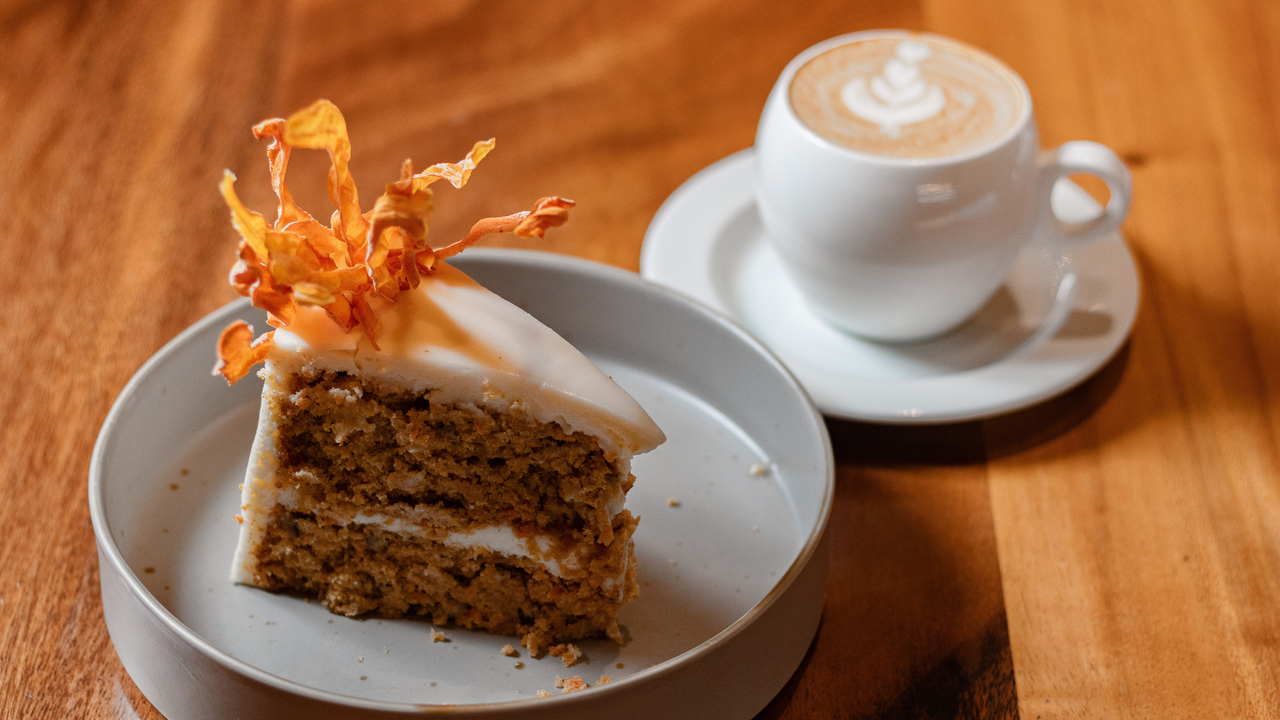
Before: every drink, hot or iced, goes into the same everyday mug. After: a few café-style glasses make iced lattes and layered drinks look like a coffee-shop order. Pinterest’s “Home Café Engineering” trend centers on DIY “house specials” and “dessert-coded lattes like Biscoff, cinnamon roll and carrot cake” (Pinterest Newsroom), drinks that look their best in clear glass.
How to get the look at home: Choose two to four glasses: a short one for espresso and a taller ribbed or stemmed glass for iced lattes. Keep them on an open shelf (idea 2) so they join the display.
Try this:
- Add two tall glasses for iced and layered drinks.
- Serve on a small wooden tray for a café-counter look.
- Check the glasses are heat-safe before you pour in hot coffee.
9. From Mismatched Containers to One Color Story

Before: bags, boxes and jars in every color. After: matching canisters and one repeated color. Good Housekeeping notes that “a clear color scheme can instantly streamline your coffee cabinet” (Good Housekeeping). A black-and-white setup by designer Kendra Nash of Nash Design Group, also in the roundup, keeps sweeteners in canisters, with the homeowners’ favorite mugs within arm’s reach (Good Housekeeping).
How to get the look at home: Decant sugar and tea into matching containers. For the beans, function comes first: the National Coffee Association advises, “Store it in opaque containers” (NCA). A stainless steel canister such as the Airscape stainless steel coffee canister keeps the look tidy; its body is opaque, but the outer lid is clear, so keep it out of direct light.
Try this:
- Pick one accent color and repeat it two or three times.
- Decant sugar, tea and filters into matching lidded containers.
- Keep the beans you’re drinking in an opaque, airtight canister.
10. From the Same Setup All Year to a Seasonal Swap

Before: the coffee bar looks exactly the same in July and December. After: a few seasonal touches keep it feeling fresh. Good Housekeeping’s designer roundup suggests, “Think florals for spring/summer, pumpkins for fall, and evergreens for winter,” and recommends a wooden mug tree so you can “change the mugs on display every few months” (Good Housekeeping).
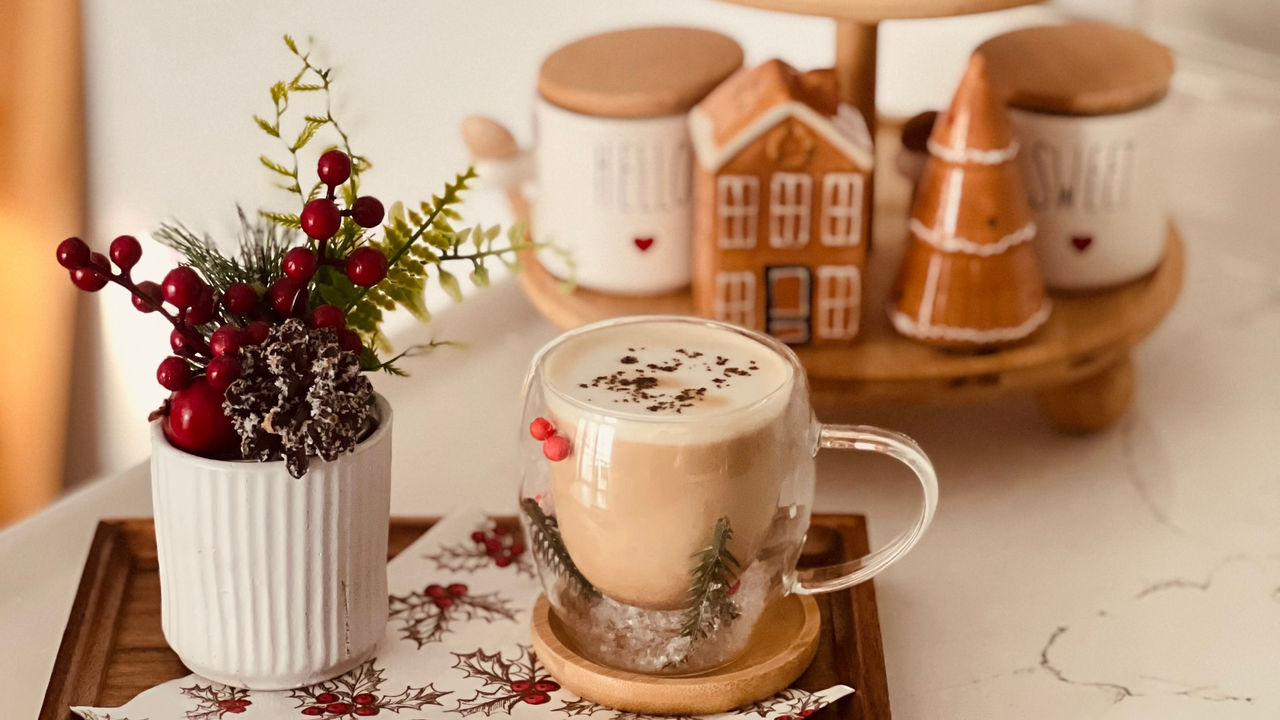
How to get the look at home: Keep a small box of seasonal mugs and greenery, and change only the decor, not the working layout. With the holidays coming, our Christmas coffee bar ideas show 20+ festive setups.
Try this:
- Store a box of seasonal mugs and small decor near the coffee bar.
- Swap the display mugs on your mug tree each season.
- Add one seasonal syrup or drink to your house menu.
FAQ
How do I make my coffee bar look nice?
Define the zone with a tray or painted backdrop, keep only daily tools out, display a few favorite mugs and add warm light where you brew.
What should be included in a coffee station?
Your brewer, a grinder for whole beans, an airtight canister, cups, sugar and filters. A New Jersey remodeler’s essentials also include a dedicated outlet and a finished wall or backsplash behind the station (Custom Kitchens by Lopez).
How do I organize a coffee station at home?
Line the tools up in brewing order, keep daily items within reach and store backups out of sight. Our home coffee bar layout guide covers spacing and power.
Do I need a remodel for a coffee bar makeover?
No. Most of the glow-ups above are styling changes. The New Jersey remodeler estimates that “a styling-only coffee bar runs about $150–$500 with no construction at all”; new outlets, plumbing and cabinetry are where costs climb (Custom Kitchens by Lopez).
How do I decorate a coffee bar for Christmas?
Swap in holiday mugs, greenery and a seasonal syrup. Our Christmas coffee bar ideas have full setups.
Wrapping Up
Pick the “before” that bothers you most and fix that first. Most of these glow-ups take an afternoon, and together they turn a machine on a counter into a little café.
Ready to upgrade the coffee itself? Start with our guide to choosing a coffee grinder.
Sources
- Pinterest Newsroom: Pinterest Hobbies Trend Report 2026 (25 Aug 2026)
- Elle Decor: Pinterest’s 2026 Hobbies Trend Report (27 Aug 2026)
- Good Housekeeping: 47 Stylish Coffee Bar Ideas to Upgrade Your Morning Routine (16 Aug 2026)
- Custom Kitchens by Lopez: Coffee Bar Ideas: Designs + What It Costs to Build One (NJ 2026) (1 Jun 2026)
- Baristanest: Coffee Bar Lighting Ideas: Task, Accent and Under-Shelf Light (9 Aug 2026)
- National Coffee Association: Storage and shelf life

Leave a Reply